

The first few weeks with a newborn can make time feel completely distorted.Parents suddenly find themselves asking the same questions dozens of times a day: When was the last feeding? Which side did breastfeeding start on? How long has the baby been sleeping? Was that diaper wet or dirty? Did anyone actually log the last bottle?
That confusion is exactly why newborn tracking apps have become essential tools for many modern parents.
The best apps do far more than simply record feedings. They track sleep schedules, diaper changes, pumping sessions, bottle amounts, medications, growth milestones, and shared caregiving routines across multiple devices.
But after testing the major newborn tracking apps currently available on the US Apple App Store and Google Play Store in 2026, one thing became obvious very quickly: many apps become frustrating under real newborn conditions. Tiny buttons, cluttered interfaces, excessive ads, and complicated menus simply do not work well at 3 a.m. with one hand free and almost no sleep.
For this guide, the testing focused specifically on apps designed to track newborn sleep, feeding schedules, and diaper changes in realistic day-to-day parenting situations.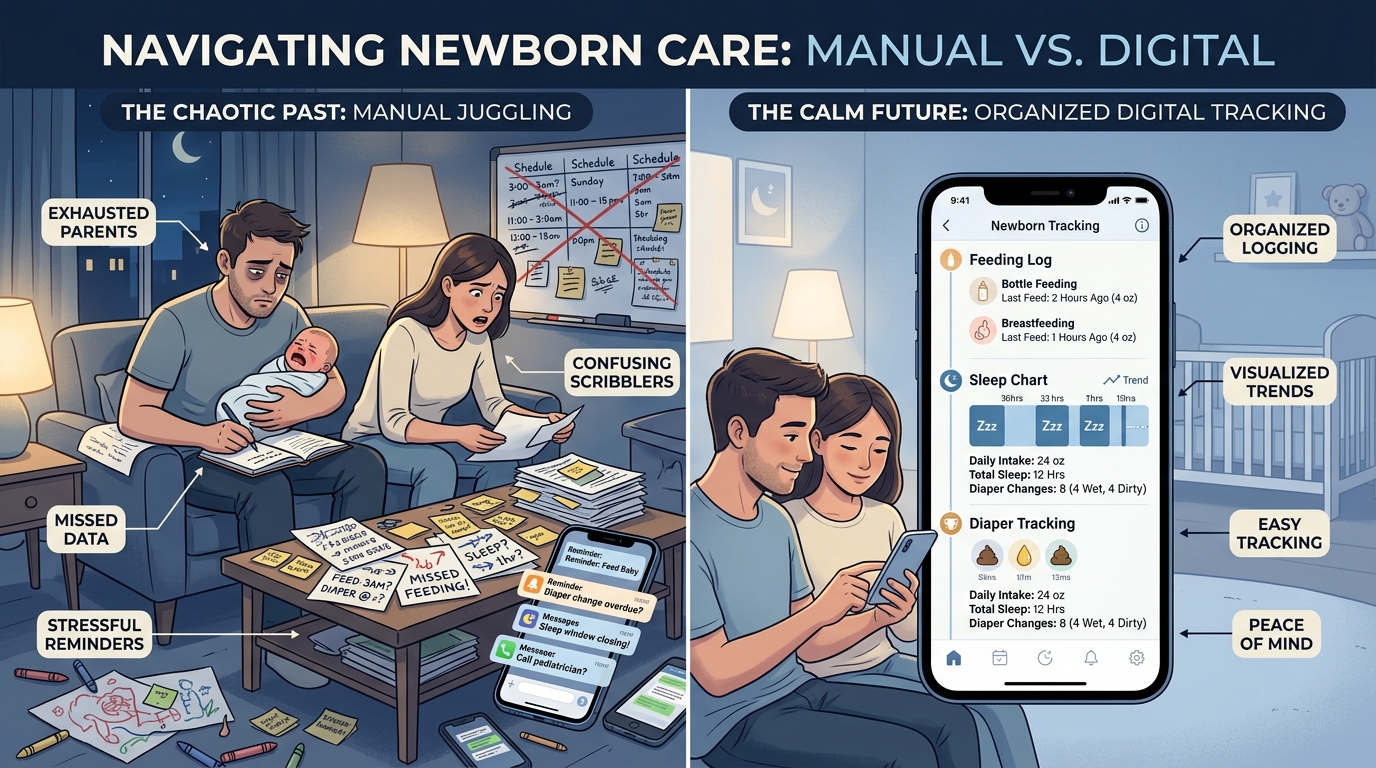
The evaluation criteria included:
Speed of logging entries
Sleep and feeding tracking accuracy
Shared caregiver syncing
Ease of use during nighttime care
Cross-platform reliability
Pricing transparency
Long-term usability
These were the apps that genuinely stood out.
Huckleberry consistently felt like the most complete newborn tracking app tested overall.
The app combines feeding logs, diaper tracking, pumping timers, growth records, medication tracking, and sleep analytics inside an interface that remains surprisingly calm and usable even during sleep-deprived overnight care.
During testing, the biggest strength was sleep prediction.
Huckleberry’s “SweetSpot” recommendations attempt to identify ideal nap windows based on the baby’s age and sleep patterns. Unlike many AI-heavy parenting tools, the recommendations often felt genuinely useful instead of random.
The logging system itself was also exceptionally fast. Feedings, sleep sessions, diaper changes, and pumping sessions could all be recorded within seconds using large one-handed controls.
Another standout feature is caregiver syncing. Multiple caregivers can update the same baby profile in real time, which dramatically reduces confusion during overnight shifts or daycare handoffs.
The free version includes core tracking tools, while premium sleep plans and advanced analytics require subscriptions typically ranging from about $9.99 to $19.99 monthly depending on features.
Excellent sleep prediction tools
Very fast one-handed logging
Strong caregiver syncing
Clean and calming interface
Great balance of features and usability
Premium sleep tools are expensive
Notifications can occasionally feel excessive
Analytics may overwhelm some parents
Baby Tracker felt refreshingly straightforward during testing.
Unlike apps trying to become full parenting ecosystems, Baby Tracker focuses almost entirely on fast reliable newborn logging — and honestly, that simplicity became one of its biggest advantages.
The app tracks feedings, diapers, sleep, pumping, growth, temperature, medications, and milestones using extremely large buttons and minimal navigation layers.
At 2 a.m., that matters more than flashy design.
During testing, logging sessions consistently felt faster than many more feature-heavy competitors. Shared syncing between caregivers also worked reliably across iPhone and Android devices.
Another underrated strength is data clarity. Charts and historical records remained easy to understand without becoming overly clinical or overwhelming.
However, the interface itself looks somewhat dated compared to newer competitors like Huckleberry. Some parents may also eventually outgrow the app if they want more advanced sleep coaching or developmental insights.
The app offers a free version with ads, while premium upgrades and ad removal are available through subscriptions and one-time purchases depending on platform.
Extremely easy nighttime logging
Reliable caregiver syncing
Large simple controls
Clear historical tracking
Lightweight and stable
Design feels older
Fewer advanced analytics
Ads in the free version
Nara Baby was one of the most surprising apps tested because it delivers a remarkably polished experience without locking core features behind subscriptions.
Created by the team behind the Nara Organics baby brand, the app includes feeding logs, sleep tracking, diaper records, pumping timers, milestone journals, growth tracking, and caregiver syncing completely free of charge.
During testing, the interface consistently felt among the cleanest and most modern in the entire category.
The timeline view was especially useful because it allowed exhausted parents to quickly scan recent activities without digging through menus.
Another standout feature is data visualization. Sleep and feeding patterns were presented clearly without overwhelming parents with excessive statistics.
The app also handled multiple caregivers very smoothly during testing. Updates synced quickly between devices, which is critical when parents alternate overnight care shifts.
However, Nara Baby still lacks some of the advanced predictive sleep tools that make Huckleberry stand out. Long-term ecosystem support is also less proven than older competitors.
The app is currently free to use without subscription requirements.
Completely free
Excellent modern design
Strong caregiver syncing
Clean timeline organization
No aggressive upsells
Fewer advanced sleep insights
Smaller ecosystem than major competitors
Limited customization options
Glow Baby leaned more heavily into analytics and developmental tracking than most competitors tested.
The app tracks feedings, diapers, sleep, pumping, growth, milestones, and health records while also generating extensive charts and developmental insights.
During testing, the amount of detail available was impressive. Parents who enjoy analyzing routines and identifying patterns will likely appreciate the app’s deeper statistical approach.
The breastfeeding tracking tools were especially strong. Features like side switching, pumping logs, nursing duration, and feeding history all felt thoughtfully designed.
Glow Baby also includes strong community features where parents can compare experiences and ask questions.
However, the app occasionally felt too busy under real newborn conditions. The interface contains more visual clutter and informational density than simpler competitors like Baby Tracker or Nara Baby.
Several features also push premium subscriptions fairly aggressively.
The free version includes core tracking, while premium plans unlock advanced analytics and personalized insights through subscription pricing around $7.99 to $12.99 monthly.
Excellent detailed analytics
Strong breastfeeding tools
Helpful developmental insights
Good community features
Extensive tracking categories
Interface can feel cluttered
Premium upsells appear frequently
Slightly steeper learning curve
Cubtale approached newborn tracking differently from nearly every competitor tested.
Instead of feeling medical or productivity-focused, the app emphasizes calming visuals, gentle organization, and emotionally reassuring design. (cubtale.com)
The result is one of the least stressful tracking experiences currently available.
During testing, logging feedings, diapers, sleep sessions, pumping, and medications felt extremely smooth. The app also handled caregiver collaboration particularly well, making it useful for couples, grandparents, and nannies.
One especially strong feature is timeline readability. Sleep-deprived parents could quickly understand recent patterns without staring at complicated graphs.
Cubtale also includes milestone tracking and memory features that soften the clinical feel common in many newborn apps.
However, some advanced analytics and automation tools remain less robust than Huckleberry or Glow Baby.
The app offers free core tracking, while premium subscriptions unlock expanded history, analytics, and customization options.
Beautiful calming interface
Excellent caregiver collaboration
Very intuitive timeline design
Less stressful than clinical-style apps
Good balance of tracking categories
Fewer advanced analytics
Premium features locked behind subscription
Some customization still limited
For parents specifically trying to track newborn sleep, feeding schedules, and diaper changes with minimal stress, Huckleberry stood out as the strongest overall option in 2026.
It consistently delivered the best balance of fast logging, caregiver syncing, useful sleep insights, and real-world usability during testing. Most importantly, it remained practical during actual sleep-deprived parenting situations instead of becoming another complicated system to manage.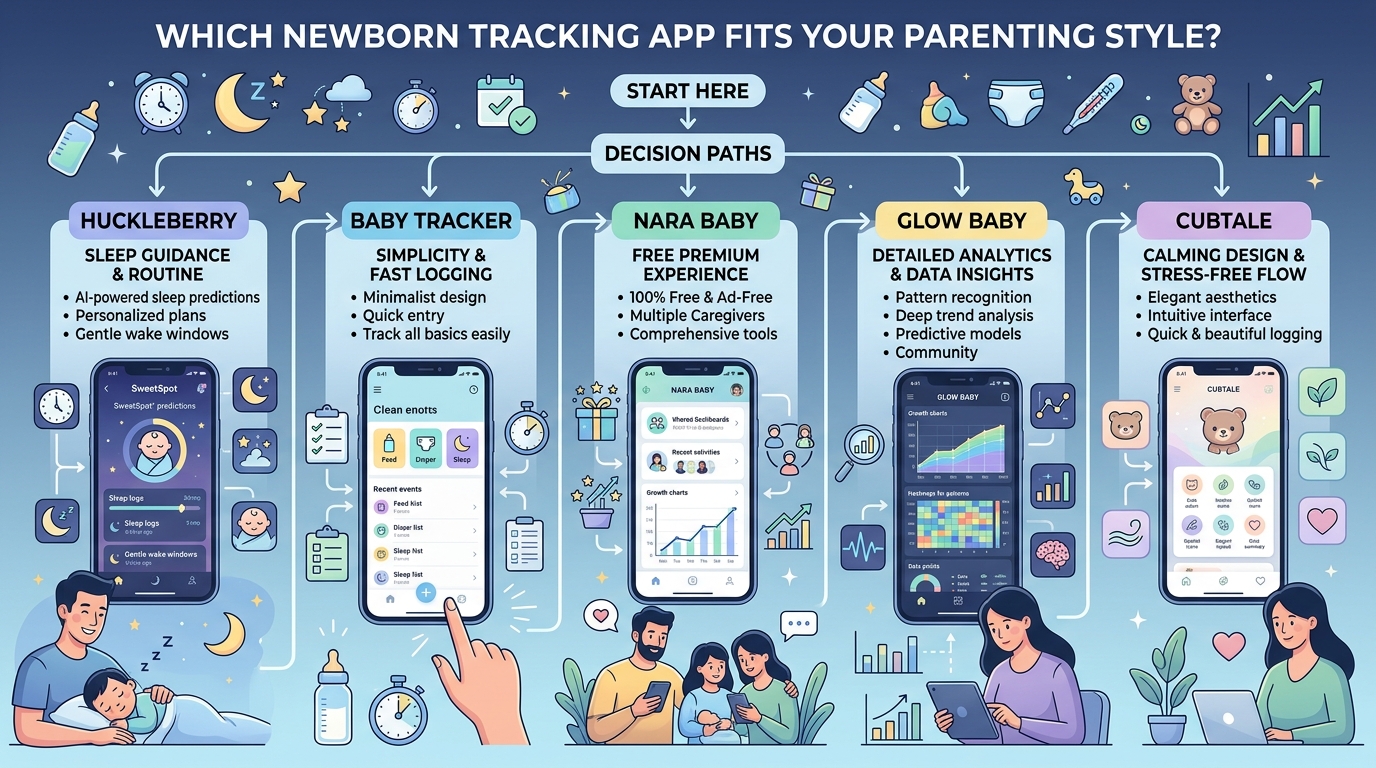
That said, the best app still depends heavily on parenting style and priorities:
Choose Huckleberry for the best all-around newborn tracking and sleep guidance.
Choose Baby Tracker for the fastest and simplest logging experience.
Choose Nara Baby for the best completely free option.
Choose Glow Baby for detailed analytics and developmental data.
Choose Cubtale for the calmest and most visually pleasant experience.
The biggest lesson from testing these apps is that newborn tracking is not really about collecting data. It is about reducing mental overload during one of the most exhausting periods of parenting. The best apps quietly accomplish exactly that.