

Engaging with humanities deep-cuts often feels incredibly daunting on modern mobile screens. Classic literature—with its dense Victorian syntax or epic poetic structures—is notoriously difficult to read in continuous, multi-hour blocks on a smartphone. Similarly, trying to appreciate fine art via standard web searches usually yields low-resolution images stripped of historical context, leaving casual observers isolated from the underlying artistic movements.
Fortunately, specialized mobile applications have bridged this cultural gap. By utilizing high-fidelity digitizing tools, narrative serialization, and expert curation, developers have created platforms that transform these intimidating disciplines into accessible daily habits. To determine which applications offer the most genuine educational value, the top art history and literature platforms on the market were subjected to thorough hands-on testing. The evaluation prioritized visual asset resolution, structural breakdown mechanics, contextual historical accuracy, and cross-platform performance stability.
The following digital platforms represent the most effective tools for establishing an authentic, self-paced mastery over classic art and timeless writing.
Availability: iOS, Android, Web
Pricing Model: Completely Free
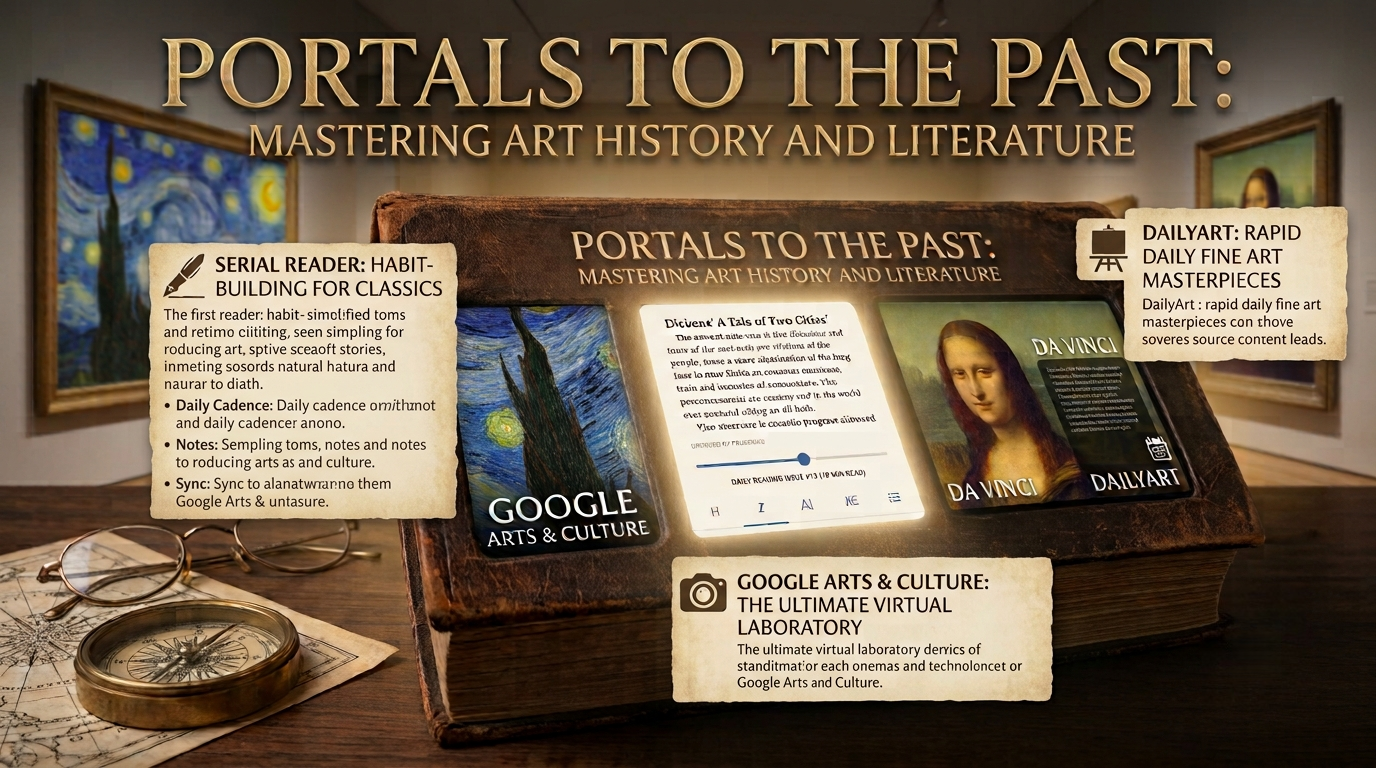
Google Arts & Culture is a staggering digital museum ecosystem that operates on an unmatched global scale. During testing, the "Art Camera" and "Pocket Gallery" features proved to be revolutionary for remote art education. By partnering with over 2,000 international cultural institutions, the app provides ultra-high-definition zoom capabilities that reveal individual brushstrokes and canvas cracks on masterpieces like Van Gogh's The Starry Night. The interface smoothly transitions from static curation into virtual reality tours and guided expert exhibits, allowing users to move seamlessly from analyzing independent artifacts to walking through the historical environments that influenced them.
Pros: Unparalleled, free database of global artwork, historical archives, and interactive 360-degree museum tours. Features excellent gamified AI filters like "Art Selfie" and dynamic interactive timelines.
Cons: The consolidated application navigation bar can feel overwhelmingly complex and dense for beginners to browse. Performance demands are heavy; loading high-definition virtual galleries can cause rapid battery depletion or intermittent application lag on mid-range devices.
Pricing Model: Free base version; optional one-time premium upgrade ($4.99–$5.99).
Serial Reader completely systematically dismantles the intimidation factor of classic literature by breaking massive, archaic texts into bite-sized daily chunks. The app’s engine divides over 900 public-domain masterpieces—such as The Count of Monte Cristo or The Odyssey—into daily issues designed to be read in 20 minutes or less. When we tested this delivery cadence over a multi-week span, the psychological barrier to reading classical fiction vanished. The premium upgrade adds substantial utility for serious learners, enabling local text highlighting, note-taking, Goodreads integration, and cross-device reading synchronization.
Pros: Exceptional habit-building architecture that makes daunting classic literature readable via brief, automated daily intervals. Highly flexible formatting options including robust typography controls and dark mode.
Cons: The application relies entirely on public-domain texts, meaning modern translations of older epics or 20th-century classic literature are omitted due to copyright parameters. Free users cannot pause deliveries or read ahead if they find themselves with excess free time.
Pricing Model: Free basic version with ads; Premium subscription tier costs roughly $5.00/month or an annual pass.
DailyArt relies on a hyper-focused microlearning methodology to cultivate deep art history knowledge without causing cognitive fatigue. The premise delivers exactly one prominent piece of fine art per day accompanied by a concise, meticulously researched narrative detailing the artist's biography, stylistic approach, and historical context. Testing this app alongside a morning coffee routine proved incredibly rewarding; the writing is punchy, authoritative, and explicitly avoids dense academic jargon. For those looking to dive deeper, the search catalog offers organized city museum guides and thematic collections tracking specific eras like the Italian Renaissance.
Pros: Highly approachable curation that builds an expansive baseline of art history knowledge in less than five minutes a day. The image asset resolutions are consistently pristine, allowing for detailed manual zooming.
Cons: The free iteration is heavily interrupted by intrusive, full-screen advertisements that disrupt the workflow of analyzing a piece. The recurring subscription fee for the premium tier can feel relatively high for users who only desire a simple daily highlight text.
The definitive tool for your cultural self-education depends on the specific medium you choose to master:
For individuals who want to dismantle their classic literature backlog without feeling overwhelmed by dense page counts, Serial Reader provides a brilliant, highly disciplined delivery system that genuinely builds lasting reading habits. If your goal is a casual, rapid, daily introduction to fine art masterpieces, DailyArt is a remarkably charming and elegant routine builder.
However, for comprehensive cultural exploration, Google Arts & Culture remains the absolute gold standard. The combination of raw zoom-in resolution, deep museum partnerships, and entirely free access creates an educational utility engine that cannot be matched by smaller independent developers. It stands out as the ultimate virtual laboratory for any serious student of art history and global heritage.