

We’ve all been there: standing in front of a half-empty can of oil-based paint, an old container of motor oil, a box of expired household chemicals, or a pile of fluorescent bulbs and batteries, wondering what to do next. These items don’t belong in the regular trash, yet many people are unsure where they can safely take them.
Improper disposal of hazardous waste can contaminate soil and groundwater, create fire hazards, and even put sanitation workers at risk. In many communities, throwing these materials into household garbage is not only environmentally harmful but also prohibited by local regulations.
The good news is that finding approved disposal locations has become much easier. Instead of digging through municipal websites or making multiple phone calls, modern recycling apps can help identify disposal rules, locate collection facilities, and explain exactly how specific materials should be handled.
To find the most useful options available today, we tested several waste-management and recycling apps available on the Apple App Store and Google Play Store. We focused on three factors: accuracy of local disposal information, ease of finding nearby drop-off locations, and overall user experience.
Here are the apps that stood out.
Pricing: Free
Recycle Coach is the gold standard for municipal-level waste management across North America. Think of it as a digital concierge for your city’s waste rules, telling you exactly how and where to dispose of everything from paint cans to old electronics.
The Reality Check:
The app’s standout feature is the “What Goes Where?” tool. Type in an item like “motor oil” or “fluorescent bulbs,” and it pulls verified instructions directly from your local waste authority. You also get reminders about collection days, special events, and temporary drop-offs. In our testing across multiple cities, Recycle Coach consistently avoided common mistakes like sending users to facilities that didn’t accept certain materials—a real lifesaver for anyone trying to follow the rules.
Pros:
Government-verified, highly accurate data.
Collection day reminders and local alerts.
Includes Recyclepedia, which explains complicated items.
Cons:
Only works where local municipalities have partnered with the platform.
Less useful for very obscure or industrial items.
Scrapp takes a more modern approach to waste management by combining barcode scanning with disposal guidance.
Scrapp is a modern, eco-conscious app that combines recycling guidance with gamification. Its focus is on barcode-level accuracy, so you can scan almost any product in your home and get precise disposal instructions.
The Reality Check:
We tested Scrapp on household chemicals, cleaning supplies, and small electronics. The app reliably identified packaging materials and offered step-by-step disposal advice. Its SmartSearch feature allows you to scan a barcode or type in an item and instantly see whether it belongs in a hazardous waste drop-off, a recycling bin, or needs special handling. Scrapp also tracks your environmental impact, giving you a tangible sense of how your actions reduce waste and pollution.
Pros:
Barcode scanning for precise guidance.
Educational explanations about why proper disposal matters.
Gamified tracking encourages ongoing responsible behavior.
Cons:
Primarily focused on household items; not suitable for industrial or large-scale waste.
Coverage in some regions may be incomplete.
Pricing: Free
TrashOut is a community-driven recycling app that helps you locate official collection points for hazardous and electronic waste while allowing users to report illegal dumping. Its crowdsourced data makes it especially useful for finding smaller or temporary collection events that more official apps might miss.
The Reality Check:
During testing, TrashOut consistently highlighted lesser-known drop-off points, sometimes just a few blocks away from our location, that other apps overlooked. You can filter by type of hazardous material—batteries, paints, chemicals, e-waste—and verify locations with photos and user reviews. It’s a powerful complement to apps like Recycle Coach, especially for areas where municipal data is incomplete.
Pros:
Community-sourced data captures smaller or temporary collection events.
Material-specific filters make searches faster.
Helps raise awareness about illegal dumping in your neighborhood.
Cons:
Data quality depends on community participation.
Less “official” than municipal-linked apps, so verification is sometimes needed.
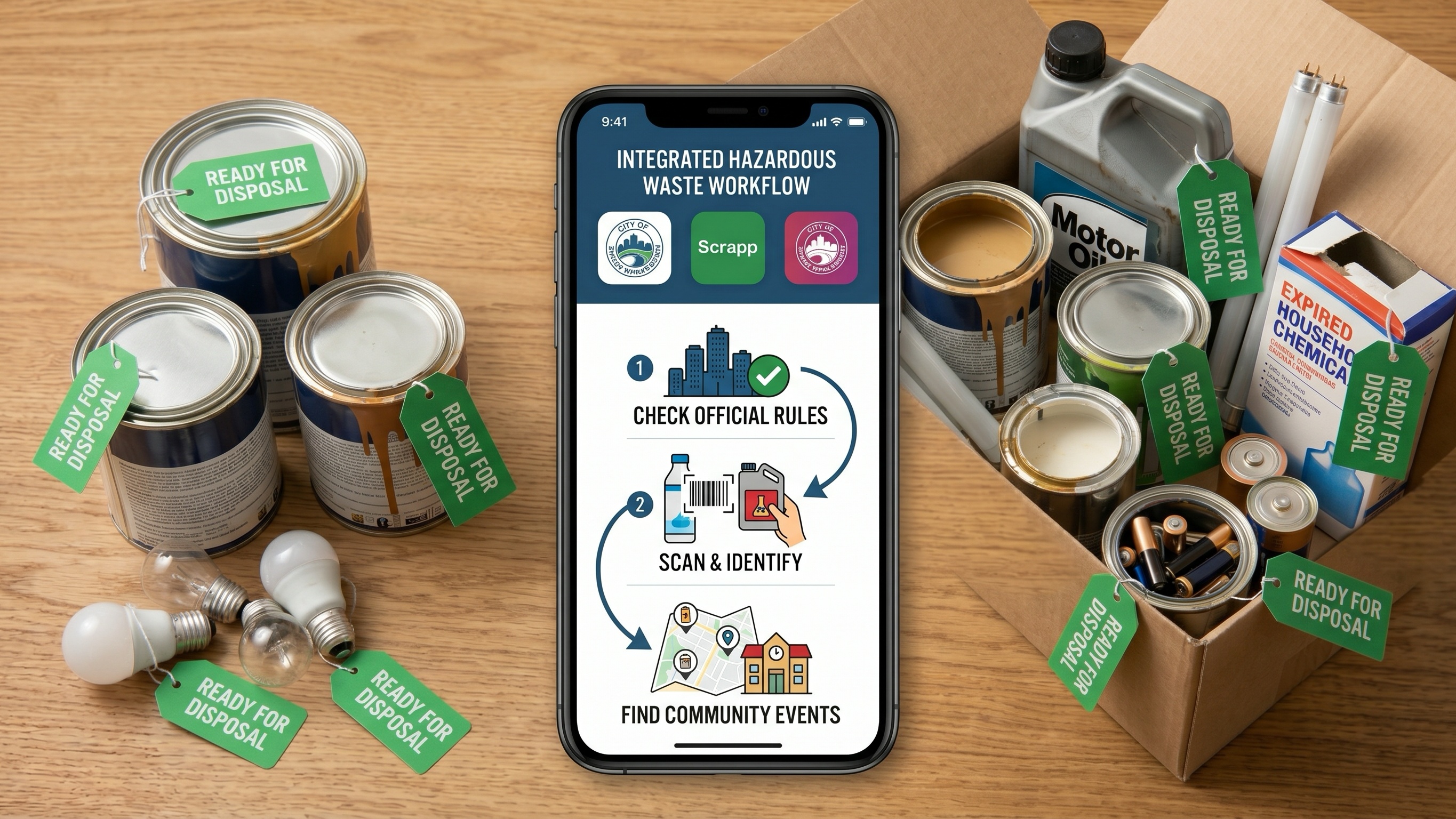
For a safe and efficient hazardous waste workflow, using all three apps together can cover every base:
Start with Recycle Coach to check official local rules. Confirm what your city handles and when collection days occur.
Use Scrapp to scan household items. This ensures you don’t accidentally toss something in the wrong bin and lets you track your environmental impact.
Check TrashOut to find temporary events, smaller collection points, or reports of illegal dumping in your area.
For example, imagine you have a partially used can of varnish, a box of old batteries, and a few cleaning chemicals:
Recycle Coach tells you your city accepts varnish only at the annual hazardous waste event.
Scrapp confirms that your batteries should go to a special drop-off, not in regular recycling.
TrashOut alerts you that a local community center is hosting a one-day collection drive for chemicals this weekend.
By combining the three apps, you save time, avoid illegal disposal, and ensure every item is handled safely.
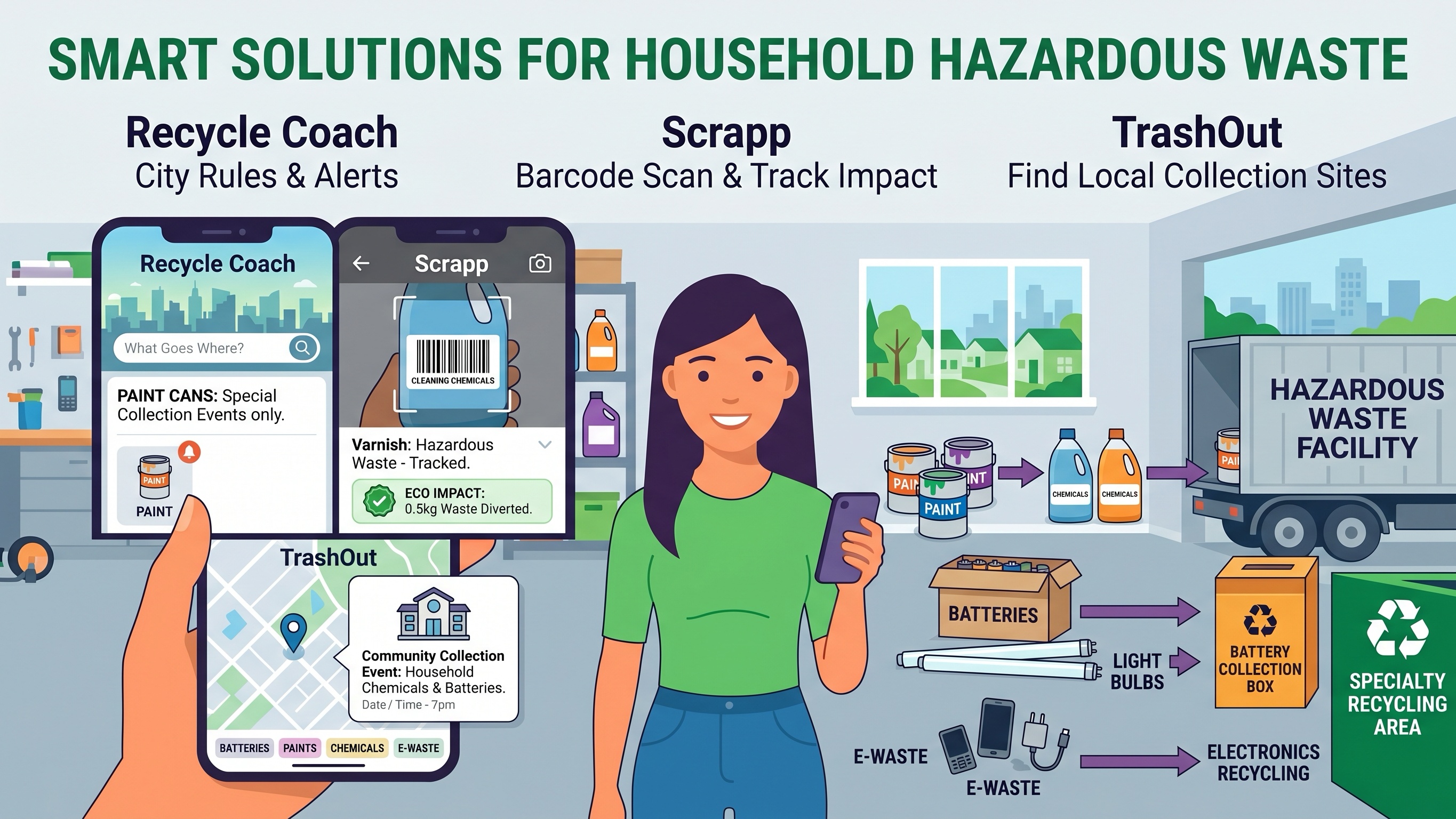
Disposing of hazardous waste used to be confusing and risky. In 2026, Recycle Coach, Scrapp, and TrashOut make it simple. Recycle Coach provides official, legally verified guidance; Scrapp ensures precise disposal and environmental tracking; and TrashOut uncovers community-driven collection points you might otherwise miss.
Used together, these apps give you a comprehensive toolkit for handling household hazardous waste responsibly—protecting the environment, keeping your home safe, and saving time. Whether you’re a new homeowner with a few paint cans or a seasoned DIYer with a garage full of old chemicals, these apps are your digital companions for sustainable waste management.