

We've all had the same frustrating experience: staring at a closet packed with clothes and somehow feeling like there's absolutely nothing to wear. The problem usually isn't a lack of options—it's a lack of visibility. When your wardrobe is spread across hangers, drawers, storage bins, and seasonal boxes, it's surprisingly difficult to remember what you actually own.
That's one reason digital closet apps have become so popular in recent years. What started as simple wardrobe inventories has evolved into a new generation of tools that can organize clothing automatically, suggest outfits based on the weather, track how often you wear certain items, and even help reduce unnecessary shopping.
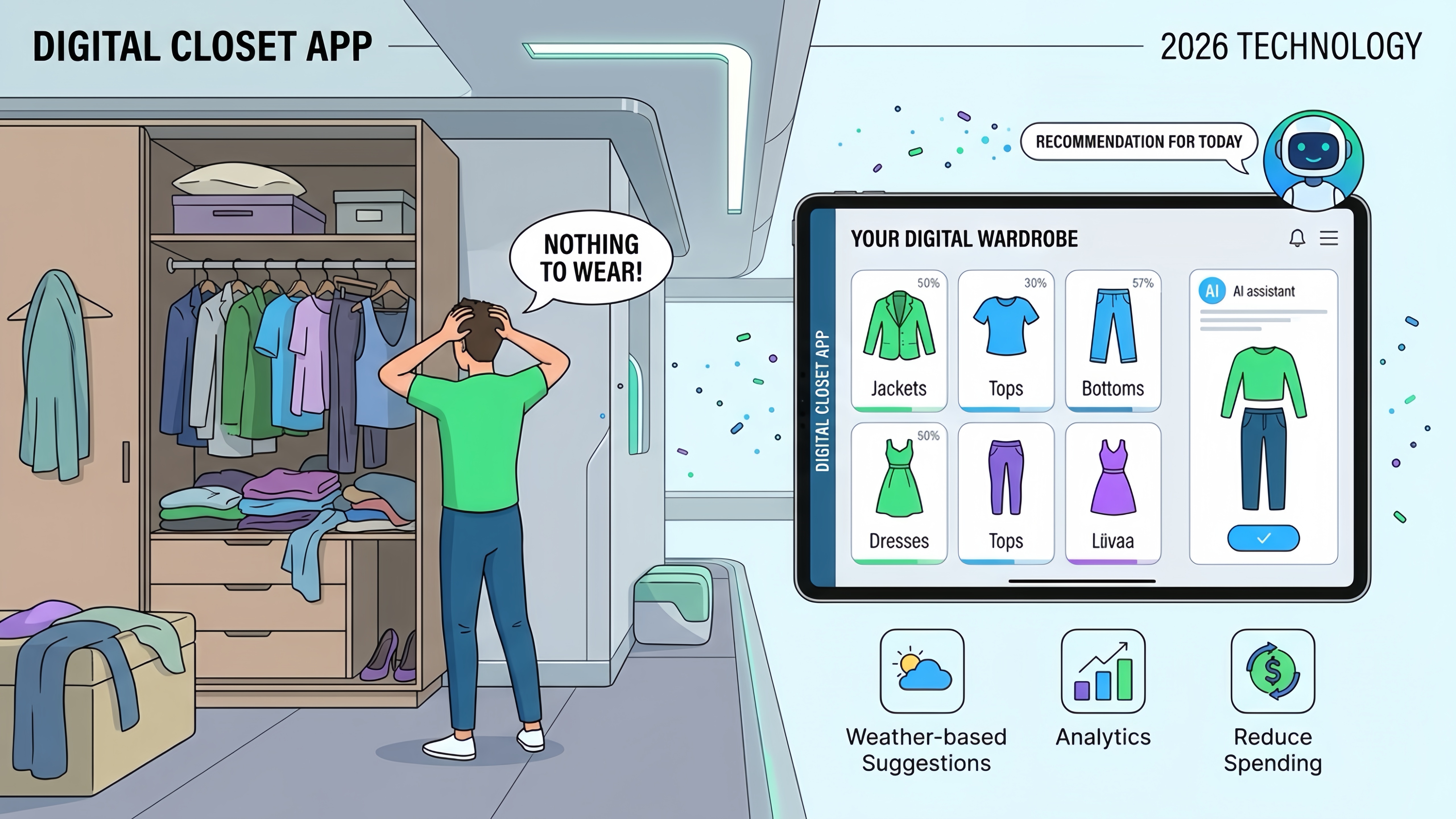
To find the best options for 2026, we tested wardrobe-management apps currently available on both the Apple App Store and Google Play Store. We focused on ease of setup, outfit-planning features, wardrobe analytics, and long-term usability. After several weeks of testing, these were the apps that stood out.
If your goal is to truly understand your wardrobe and shopping habits, Indyx is one of the most sophisticated options available today.
Unlike many closet apps that focus primarily on outfit inspiration, Indyx places a strong emphasis on wardrobe analytics. The app encourages users to treat their closets more intentionally by tracking purchases, monitoring wear frequency, and identifying which pieces deliver the most value over time.
What impressed us most during testing was the app's ability to simplify wardrobe cataloging. Uploading clothing photos is relatively painless, and the automatic categorization tools are among the most accurate we've seen.
The app also allows users to track purchase prices and monitor cost-per-wear. This may sound like a niche feature, but it becomes surprisingly useful after a few months. You quickly discover which items earn their closet space and which expensive purchases rarely leave the hanger.
For anyone trying to build a more sustainable wardrobe, these insights can be eye-opening.
Excellent wardrobe analytics and reporting.
Helpful cost-per-wear tracking.
Strong item categorization and organization tools.
Professional-looking outfit boards and collections.
Data-focused interface may feel overwhelming at first.
Styling recommendations are practical rather than highly fashion-forward.
Premium features require a subscription.
Free version available; premium subscription required for advanced features.
Whering has become one of the most talked-about wardrobe apps in recent years, and it's easy to understand why.
The app manages to make closet organization feel fun rather than tedious. Instead of focusing heavily on statistics, Whering encourages users to experiment with new combinations and get more use from existing clothing.
The standout feature is Dress Me, which generates outfit suggestions using items already in your wardrobe.
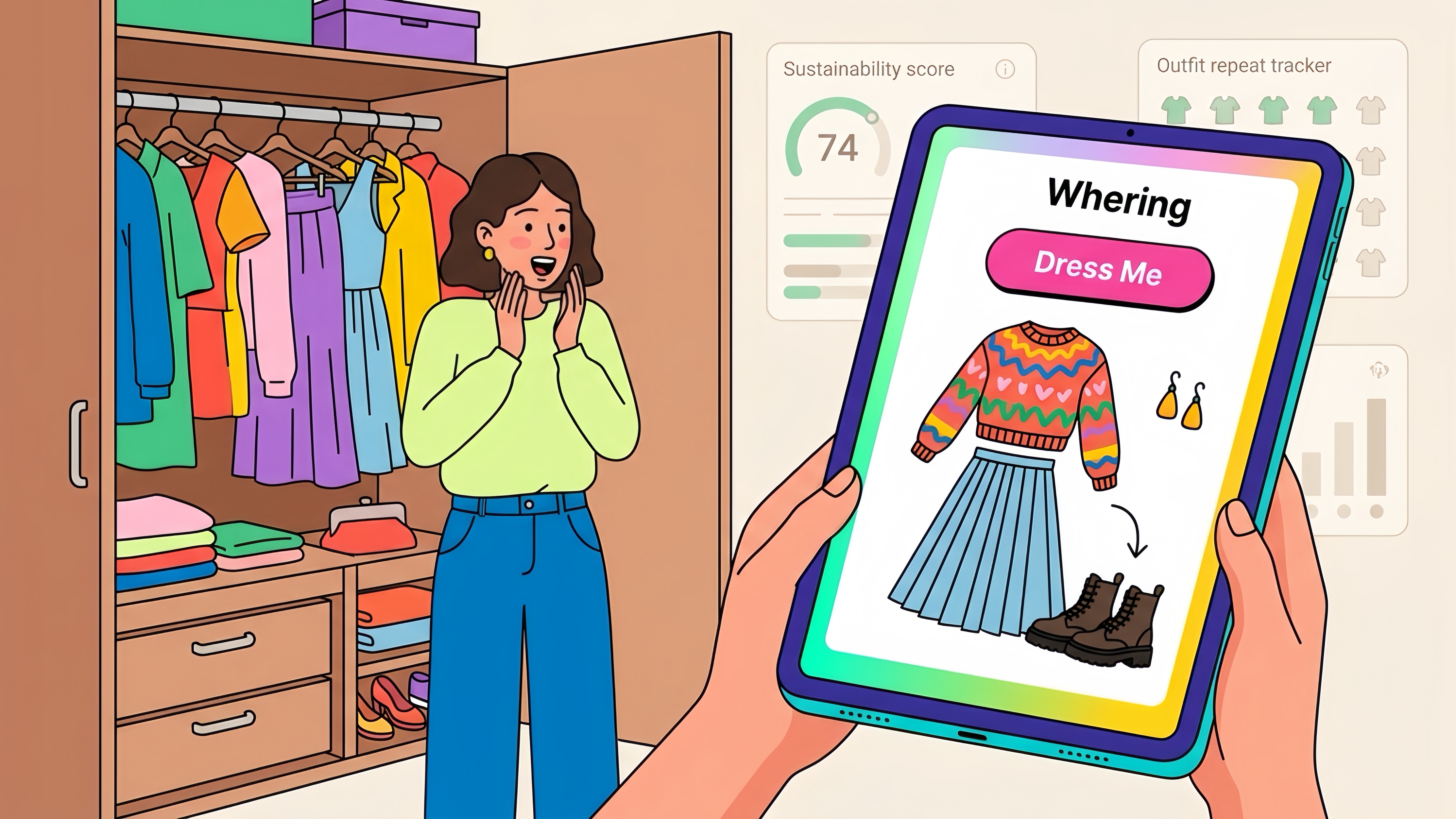
Many AI outfit generators feel repetitive after a while. Whering performed better than expected, frequently suggesting combinations we probably wouldn't have created ourselves.
The app also makes it easy to plan outfits for upcoming events, vacations, and workweeks. During testing, we found ourselves reaching for it most often when packing for trips.
Another strength is its sustainability focus. Whering regularly highlights how often you're repeating outfits and encourages mindful shopping habits instead of constant purchasing.
Attractive, beginner-friendly design.
Strong outfit-generation tools.
Excellent travel and packing features.
Encourages sustainable wardrobe habits.
Limited wardrobe analytics compared to Indyx.
Community features may not appeal to everyone.
Outfit suggestions occasionally prioritize creativity over practicality.
Free core experience with optional premium upgrades.
If you're looking for the best balance between wardrobe management and daily usefulness, Acloset remains one of the strongest all-around choices.
The app combines AI-powered outfit recommendations, wardrobe organization, and shopping inspiration without becoming overly complicated.
Weather integration is where Acloset truly shines.
Throughout testing, the app consistently provided practical outfit recommendations based on local weather conditions. On cooler mornings followed by warmer afternoons, it often suggested layered outfits that made sense throughout the day.
The AI tagging system is also quite effective. Uploading clothing photos is relatively quick, and the app automatically identifies categories, colors, and garment types with reasonable accuracy.
For users who want useful recommendations without spending hours managing a digital closet, Acloset hits a sweet spot.
Excellent weather-based outfit planning.
Easy-to-use AI clothing recognition.
Active user community for inspiration.
Good balance of automation and customization.
Free plan limits wardrobe size.
Advertisements can occasionally interrupt the experience.
Some advanced features require a subscription.
Free tier available; premium plans unlock additional wardrobe capacity and styling tools.
Pureple has been around for years, but it continues to remain relevant thanks to its strong outfit-generation capabilities.
Unlike some newer competitors that focus heavily on social features, Pureple stays focused on helping users create wearable outfits from the clothes they already own.
The app's outfit suggestion engine performed surprisingly well during testing.
After cataloging a wardrobe, Pureple automatically generates combinations based on categories, colors, and previous outfit history. While the recommendations aren't always groundbreaking, they're practical enough to help break out of style ruts.
The packing planner is another useful feature. If you're preparing for a business trip or vacation, the app can help organize outfits in advance and reduce overpacking.
For users who primarily want styling assistance rather than detailed wardrobe statistics, Pureple remains a strong choice.
Strong automatic outfit generation.
Helpful travel-packing tools.
Straightforward user experience.
Available on both major mobile platforms.
Interface feels slightly dated compared to newer competitors.
Clothing upload process requires some manual adjustments.
Analytics are fairly basic.
Free version available with optional premium upgrades.
Not everyone wants AI recommendations or social fashion communities. Some people simply want a reliable way to organize their clothing inventory.
That's where Smart Closet excels.
Among all the apps we tested, Smart Closet offered some of the best search and filtering capabilities.
Once your wardrobe grows beyond a few hundred items, organization becomes increasingly important. Smart Closet makes it easy to locate specific garments using categories, colors, brands, seasons, and other filters.
The app is also lightweight and responsive. Even with large wardrobes, performance remained smooth throughout testing.
While its styling features aren't as advanced as competitors like Acloset or Whering, it provides everything needed for effective wardrobe management.
Fast and reliable performance.
Excellent filtering and search tools.
Works well with large wardrobes.
Clean, uncluttered interface.
More manual setup than some competitors.
Limited AI styling functionality.
Visual design feels somewhat utilitarian.
Free version available; premium upgrades add cloud backup and synchronization features.
The good news is that there is no longer a shortage of high-quality digital closet apps available on both iOS and Android. The best choice simply depends on what problem you're trying to solve.
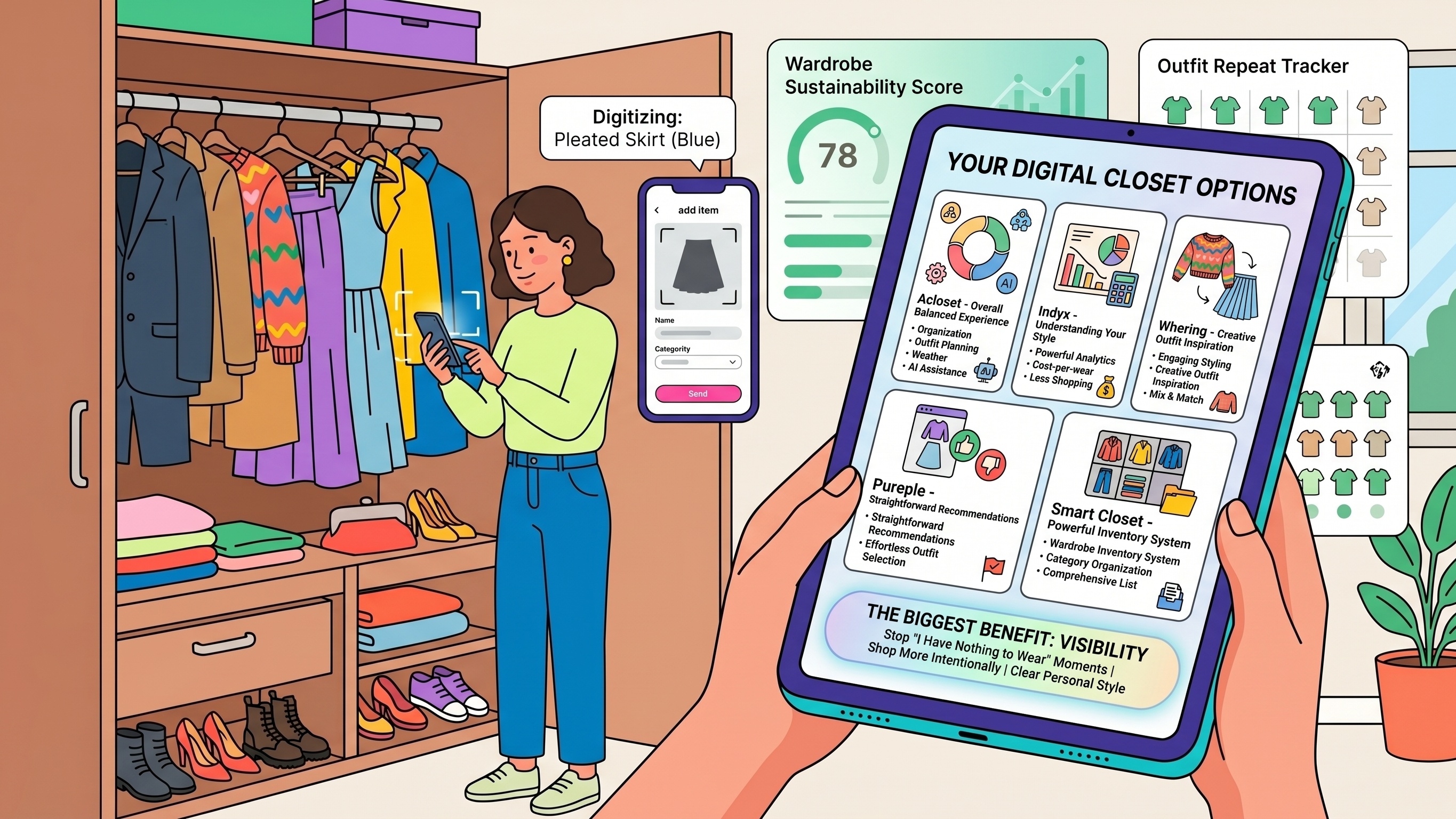
If you want the most balanced experience overall, Acloset is our top recommendation. It combines organization, outfit planning, weather integration, and AI assistance in a way that feels genuinely useful on a daily basis.
For users focused on shopping less and understanding their wardrobe better, Indyx offers the most powerful analytics and cost-per-wear insights.
If outfit inspiration is your primary goal, Whering provides one of the most engaging and creative styling experiences available today.
Meanwhile, Pureple remains a great option for users who want straightforward outfit recommendations, and Smart Closet is ideal for anyone who simply needs a powerful wardrobe inventory system.
Ultimately, the biggest benefit of these apps isn't the AI or the analytics—it's visibility. Once you can actually see everything you own in one place, getting dressed becomes faster, shopping becomes more intentional, and those "I have nothing to wear" moments become far less common.
Spend a few minutes each day digitizing your wardrobe, and within a week you'll likely discover forgotten favorites, identify unnecessary duplicates, and gain a much clearer understanding of your personal style. That's a surprisingly big payoff for an app that lives in your pocket.