

Walking through historic districts in cities like Savannah, Charleston, Boston, New Orleans, or Chicago can feel like stepping through a living architecture textbook.
The challenge is that most buildings don't come with detailed explanations. A traveler may recognize that a structure looks Victorian, Beaux-Arts, Federal, Gothic Revival, or Art Deco, but identifying the exact style and understanding its historical significance often requires substantial research.
After testing a variety of architecture, landmark-identification, and historical-discovery apps, it became clear that no single app perfectly serves architecture enthusiasts. However, several tools stand out for helping users identify buildings, learn architectural styles, document discoveries, and better understand historic urban environments.
The apps below were evaluated using four criteria:
Architectural identification capabilities
Historical context and educational value
Documentation and discovery features
Overall usefulness for exploring historic American cities
Building Lore is one of the few apps specifically designed around architectural discovery.
Users can photograph a building and receive AI-generated information about architectural styles, construction periods, design characteristics, and historical context. The app also allows users to save discoveries and build a personal collection of explored buildings.
During testing, the strongest feature was its emphasis on architectural styles rather than simply identifying famous landmarks. For architecture-focused travelers, that distinction matters.
Designed specifically for architecture exploration
Identifies architectural styles and characteristics
Provides historical and cultural context
Includes personal discovery tracking
Currently Android-focused
AI-generated results should be independently verified for academic use
Coverage may vary for lesser-known buildings
Free download. Premium features are available for members.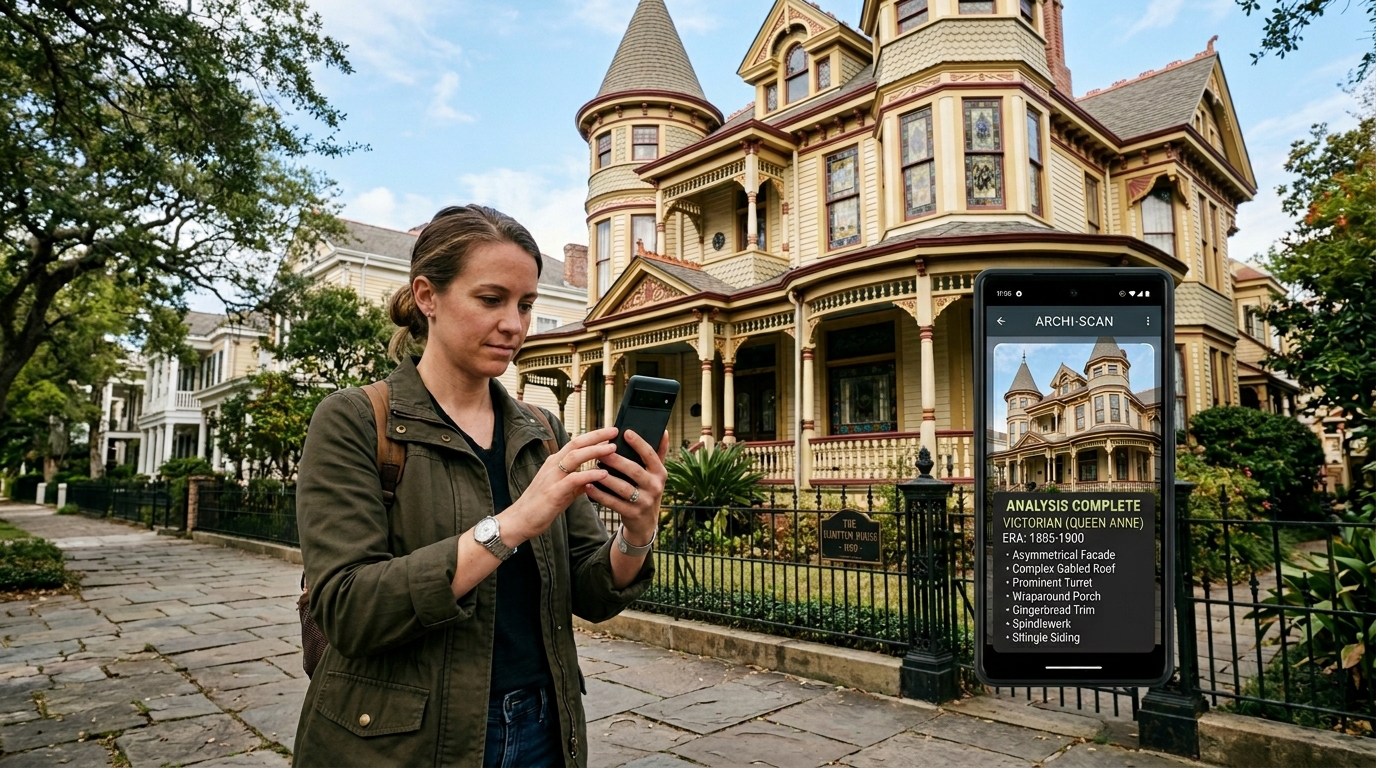
Landmark Identifier: Travel focuses on identifying monuments, historic buildings, and notable landmarks from photographs.
The app provides architectural-style information, historical background, cultural context, and mapping features that allow users to track discoveries. During testing, it proved particularly useful when exploring historic downtown districts where multiple architectural styles coexist within a few blocks.
While it is broader than a dedicated architecture app, its educational content is surprisingly useful.
Quick landmark identification
Includes architectural-style information
Tracks discoveries on a map
Beginner-friendly interface
iPhone-only
More focused on landmarks than architecture scholarship
Some information can feel generalized
Free download with optional in-app purchases and premium access plans.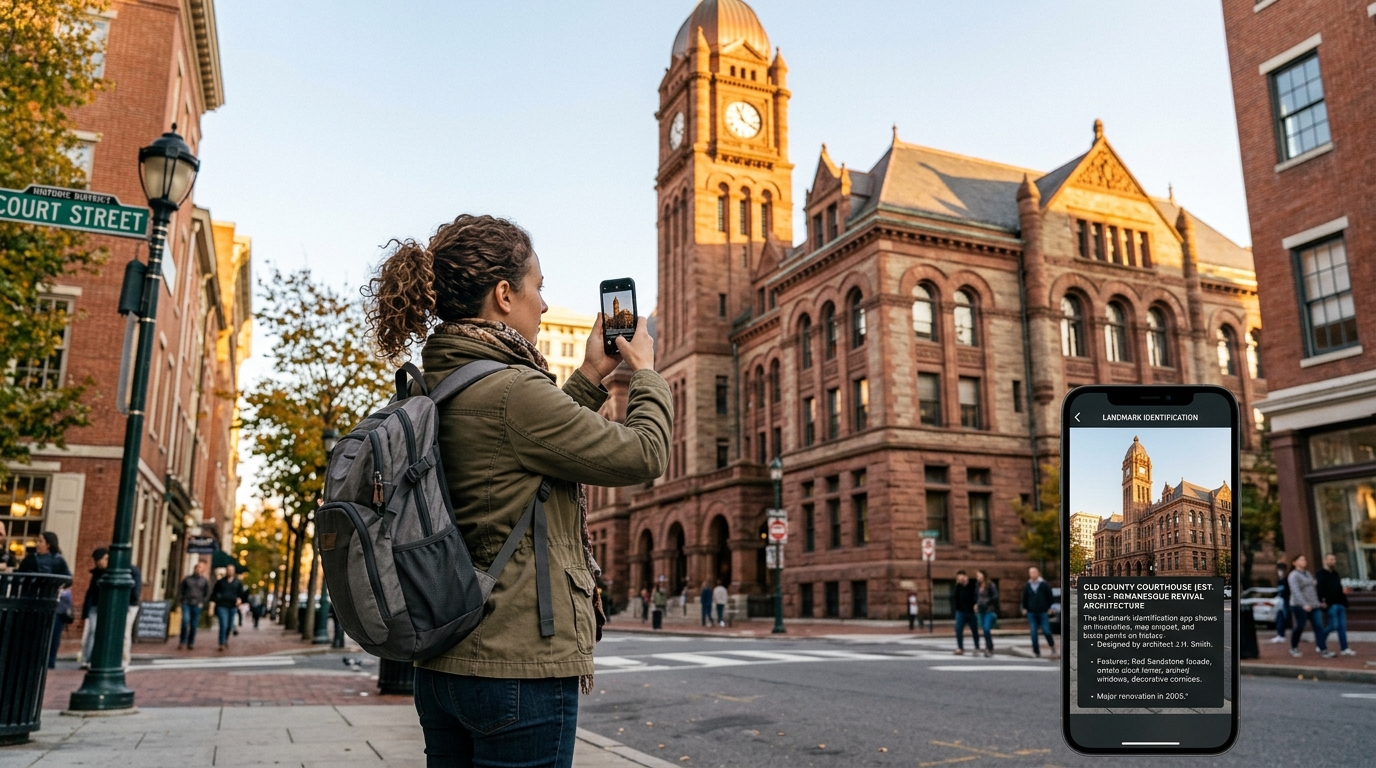
GotHistory approaches architectural exploration from a historical perspective.
Users can point their camera at buildings, monuments, and historic sites to receive identification and historical information. The app also includes discovery maps and a travel log that records visited locations.
During testing, GotHistory performed best in historic city centers where architectural significance is closely tied to local history.
Fast landmark and building recognition
Useful historical summaries
Discovery map features
Automatic visit logging
Less architecture-focused than some alternatives
Limited free scanning allowance
iPhone-only
Free download with optional Pro subscriptions and in-app purchases. Free users receive a limited number of scans each month.
ArchitectureScan is one of the most architecture-specific identification tools currently available.
The app allows users to photograph buildings and receive information about architectural styles, historical eras, structural characteristics, and design influences. It also includes educational resources covering architectural movements and style evolution.
For travelers specifically interested in identifying whether a building is Second Empire, Richardsonian Romanesque, Art Moderne, or Mid-Century Modern, ArchitectureScan offers more specialized information than most general travel apps.
Architecture-focused design
Strong educational content
Style and era identification
Useful for students and enthusiasts
Smaller user base
Subscription model for full access
Recognition accuracy varies with image quality
Free download with optional monthly and yearly subscriptions.
Google Maps may not identify architectural styles directly, but it consistently proved valuable for finding historic districts, preservation areas, architecture tours, landmarks, museums, and neighborhood walking routes.
During testing, it often served as the foundation for architecture-focused explorations by helping locate historically significant neighborhoods before switching to specialized identification apps.
Excellent navigation
Helps locate historic districts
Strong place information
Free and widely available
No architectural-style identification
Limited educational content
Not designed for architecture enthusiasts
Free.
For travelers whose primary goal is identifying and understanding architectural styles in historic American cities, Building Lore emerged as the most specialized option currently available.
Its focus on architectural analysis, style recognition, and historical context aligns closely with the needs of architecture enthusiasts, preservation advocates, and urban explorers.
However, the most effective combination during testing was:
Building Lore for architectural style identification
ArchitectureScan for deeper architectural learning
Landmark Identifier: Travel for landmark recognition and documentation
GotHistory for historical context
Google Maps for discovering historic districts and planning walking routes
Together, these apps create a surprisingly powerful toolkit for exploring America's architectural heritage.
Whether documenting Federal-style townhouses in Boston, Art Deco skyscrapers in Chicago, Victorian neighborhoods in San Francisco, or Creole cottages in New Orleans, these tools help transform an ordinary city walk into a much richer architectural experience.