

Creating a thriving native pollinator garden is both rewarding and challenging. You want to attract bees, butterflies, and other beneficial insects while ensuring your plants are healthy, native to your region, and able to support local ecosystems. However, knowing which plants truly support pollinators, identifying them accurately, and maintaining them according to seasonal cycles can quickly become overwhelming, especially if you are managing a backyard, a community plot, or a restoration site.
Modern technology offers practical solutions. In 2026, several apps are available to help gardeners, homeowners, and ecological enthusiasts plan, identify, and manage pollinator-friendly gardens. After reviewing features, usability, and ecological accuracy, we’ve identified five tools that stand out for native pollinator gardening.
Gardening for pollinators is not just about planting flowers. It involves understanding the ecology of your region, selecting native species, and timing your maintenance to support life cycles. Many common gardening apps focus on ornamental plants or generic watering schedules, which do little to support native pollinators. Mistaking a toxic or invasive species for a beneficial plant can inadvertently harm insects you are trying to help.
Smart apps help by:
Providing accurate identification of native plants and their pollinator relationships.
Offering seasonal care guidance, tailored to local climate conditions.
Helping track biodiversity and habitat health over time.
Using technology in this way ensures your garden is more than decorative—it becomes a functional ecosystem.
Pricing: Free (Supported by California Academy of Sciences)
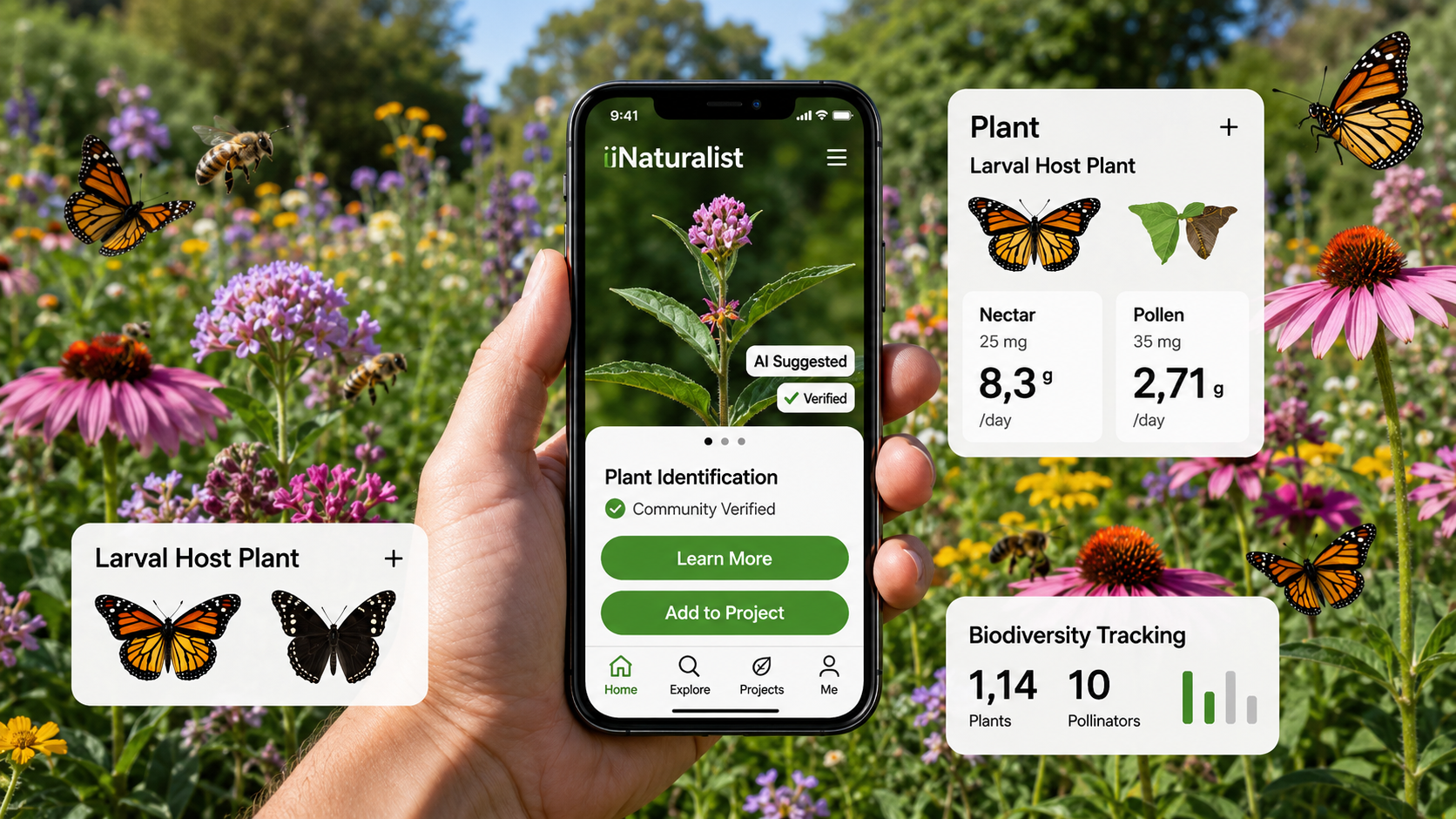
iNaturalist combines AI-powered plant and animal identification with a global community of experts who verify observations. Unlike many apps that focus only on flowers, iNaturalist allows users to identify leaves, stems, buds, and even signs of herbivory, which is crucial for distinguishing native plants from look-alikes.
Why it stands out:
Expert Verification: Community of botanists and naturalists ensures accurate identifications.
Larval Host Data: Indicates which butterfly species rely on each plant.
Biodiversity Tracking: Users can log species to monitor the ecological health of their garden over time.
Considerations: The interface prioritizes functionality over design and may feel overwhelming to new users. Rare species may require patience for verification. Nonetheless, iNaturalist is the most reliable tool for ecological accuracy.
Verdict: Best for identification and discovery. Essential for differentiating native species from invasive look-alikes.
Pricing: Freemium (Premium subscriptions vary by region, typically around $29.99/year)
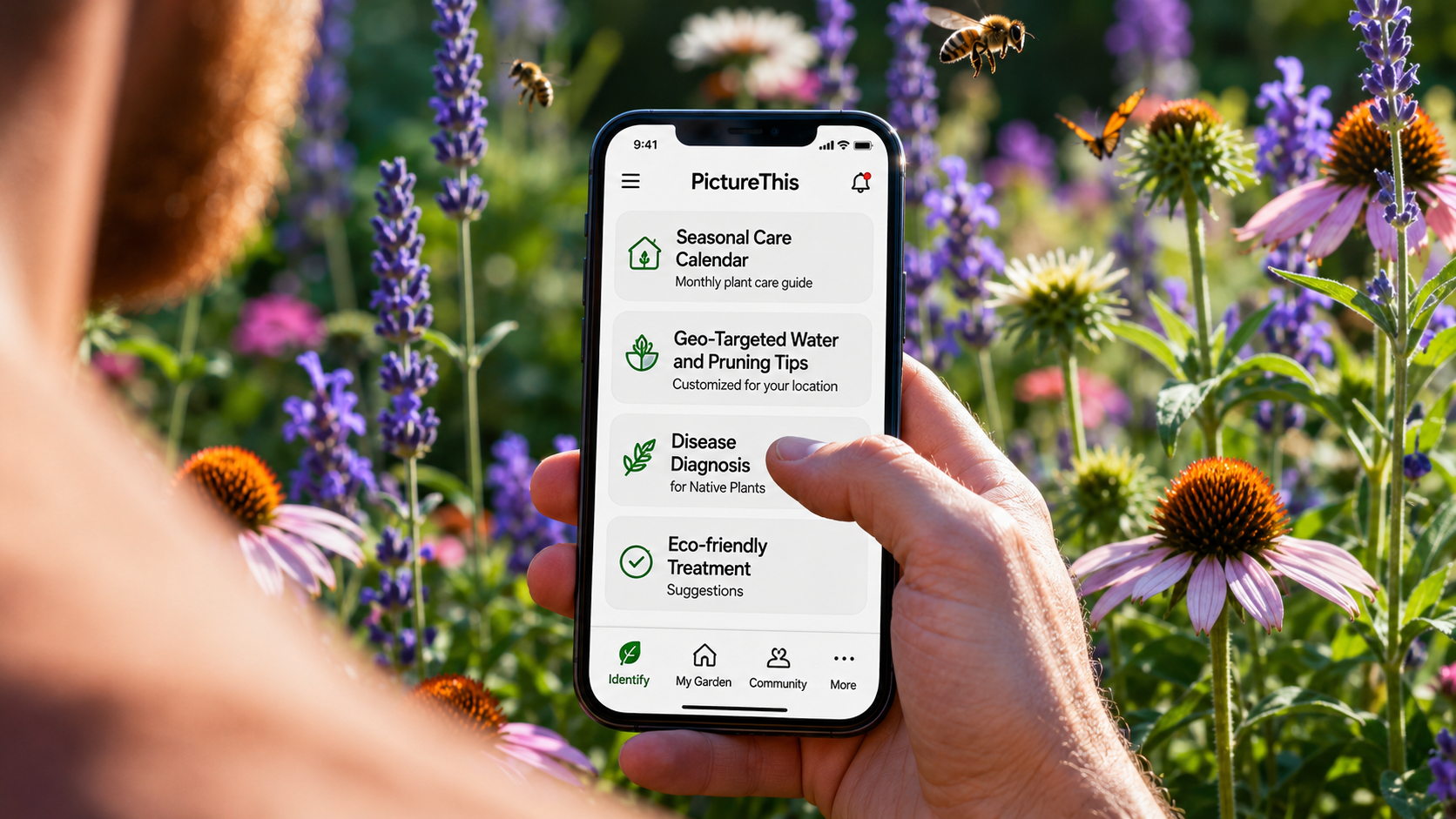
PictureThis is primarily a plant identification app, but its seasonal care guidance makes it particularly valuable for pollinator gardens. The app adjusts recommendations based on your location and species, offering tips on watering, pruning, and disease management.
Highlights:
Geo-Targeted Advice: Seasonal care schedules customized for your climate.
Diagnostic Tools: Identifies common plant diseases and suggests eco-friendly treatments.
Invasive Plant Detection: Warns against species that could disrupt pollinator habitats.
Considerations: Frequent prompts to upgrade can be annoying. Less reliable for grasses and sedges. Users should interpret treatment suggestions carefully to avoid harming pollinators.
Verdict: Best for gardeners seeking actionable maintenance advice alongside identification.
Pricing: Free with ads; optional Premium for $19.99/year
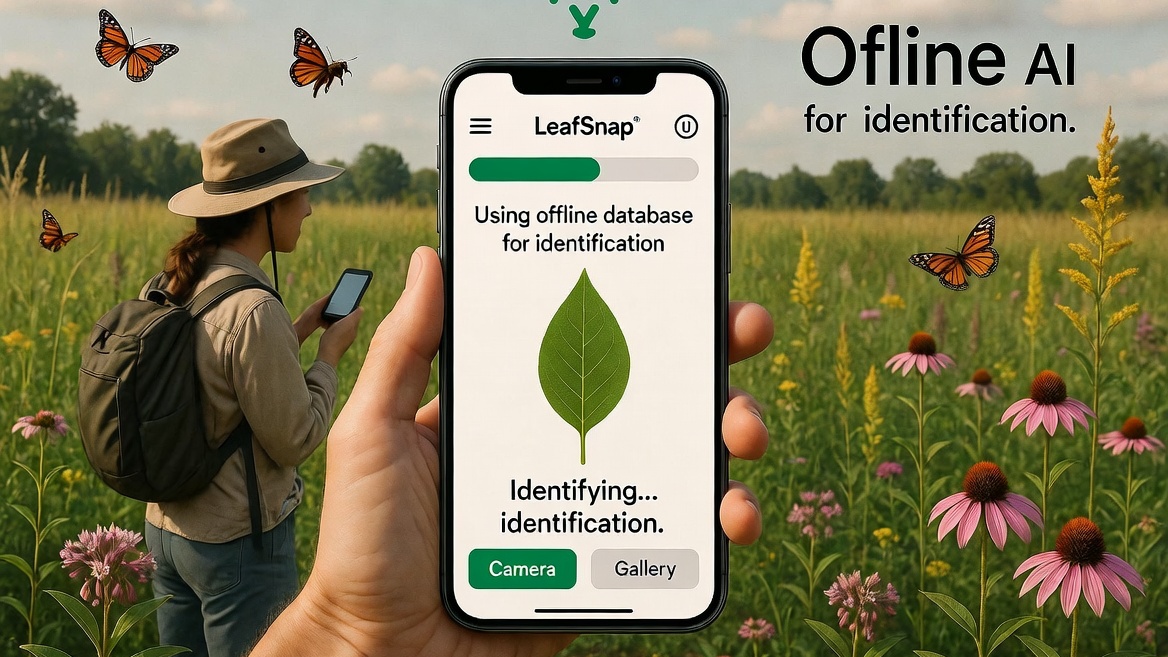
LeafSnap performs well in areas with limited connectivity, such as rural or remote pollinator gardens. Its AI can recognize plants from leaf characteristics, making it useful when flowers are absent or dormant.
Advantages:
Offline Functionality: Perfect for locations with poor signal.
Leaf-Based Identification: Works even without flowers.
Fast Recognition: Quick suggestions for common native species.
Limitations: LeafSnap does not provide pollinator-specific information. It may misidentify cultivars versus native species and includes intrusive ads in the free version.
Verdict: Ideal as a field guide. Pair with other apps for maintenance and ecological planning.
Pricing: Free
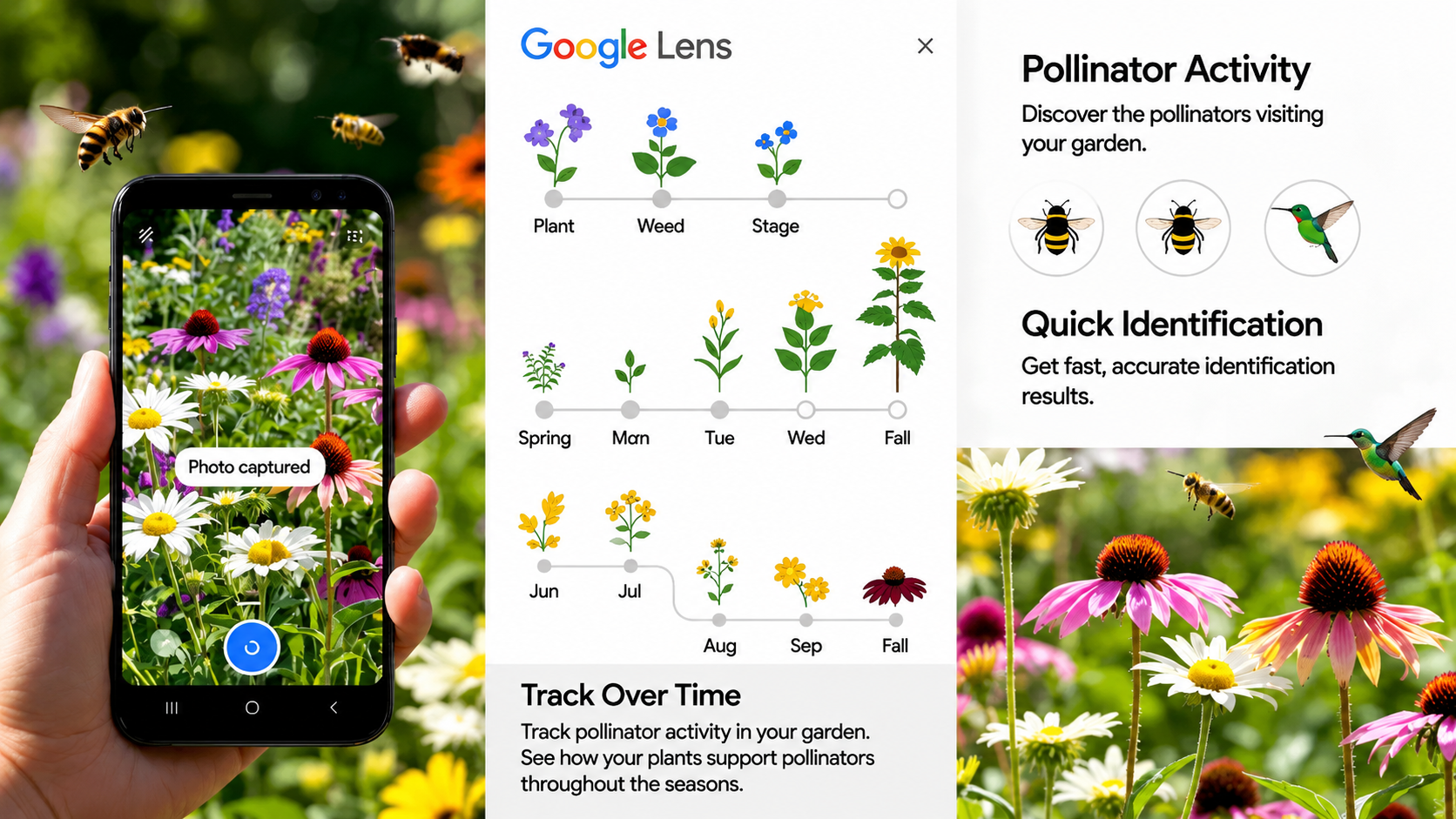
Google Lens allows gardeners to document plant growth and monitor changes visually. By saving images to Google Photos or Collections, you can compare seasonal development, track blooms, and identify common species.
Highlights:
Ease of Use: Most users already have it installed.
Visual Comparison: Helps track growth, flowering, and pest signs.
Quick Identification: Works well for common native species.
Considerations: Lens does not provide ecological or pollinator-specific data. Requires internet connectivity and careful privacy settings.
Verdict: Perfect for casual gardeners to monitor garden growth visually.
The best pollinator gardening app ultimately depends on how you plan to use it.
If your primary goal is identifying native plants and learning more about the wildlife they support, iNaturalist is the strongest option. Its combination of AI-powered identification and community verification makes it one of the most trusted resources available to nature enthusiasts.
Gardeners who want ongoing care recommendations may find PictureThis more useful. While it isn't specifically designed for pollinator habitats, its maintenance reminders, disease detection tools, and localized care suggestions can help keep native plants healthy throughout the growing season.
For those who frequently work in rural areas, restoration sites, or locations with unreliable cell service, LeafSnap offers a practical solution. Its ability to identify plants quickly without requiring a constant connection makes it a valuable field companion.
Meanwhile, Google Lens remains one of the easiest tools to use because it's already integrated into the daily workflow of many smartphone users. While it lacks the ecological depth of dedicated gardening apps, it provides a fast way to identify common species and document changes in your garden over time.
Even the best app is only as useful as the information you collect. A few simple habits can significantly improve your results.
Many native plants look dramatically different during spring emergence, summer flowering, and fall dormancy. Taking photos throughout the year creates a valuable visual record and can make future identifications much easier.
Keep notes on which plants attract bees, butterflies, hummingbirds, or other beneficial insects. Over time, you'll begin to see which species provide the greatest ecological value in your specific location.
AI-powered plant recognition has improved tremendously, but mistakes still happen. If an identification seems surprising, use a second app or consult local gardening groups before making major decisions.
Pollinator gardening is a long-term project rather than a one-season experiment. The most successful gardens are often the result of several years of observation, adjustment, and learning.
No single app can do everything. The most effective approach is to choose tools that complement one another.
For serious native plant enthusiasts, iNaturalist remains the most valuable resource thanks to its scientific credibility and community-driven verification system. If plant maintenance is your biggest challenge, PictureThis offers some of the most practical care recommendations available today.
Gardeners who regularly work in remote locations should keep LeafSnap installed as a reliable backup identification tool, while Google Lens is an excellent option for casual users who want quick answers without downloading another specialized platform.
Ultimately, these apps are not replacements for experience in the garden. They are tools that help you learn faster, make better decisions, and better understand the relationship between native plants and the pollinators that depend on them.
With thoughtful planning and consistent observation, even a modest backyard pollinator garden can become an important source of habitat for bees, butterflies, and other beneficial wildlife.